
The One-Sentence Rule — and Its Exceptions
If your garage door suddenly feels heavier to lift, jerks instead of gliding, or closes unevenly, the springs are probably wearing out. That rule holds most of the time, but not always: a strong opener motor can mask a weak spring for months, hiding the strain until the day the spring finally lets go. And sometimes a door that feels "off" has nothing to do with springs at all — bent rollers, a misaligned track, or a worn cable can mimic the same symptoms. The checklist below helps you tell the difference before you're stuck calling someone on a Saturday with a door that won't budge.
Walk the Garage: An 8-Point Spring Check
1. Look at the springs themselves
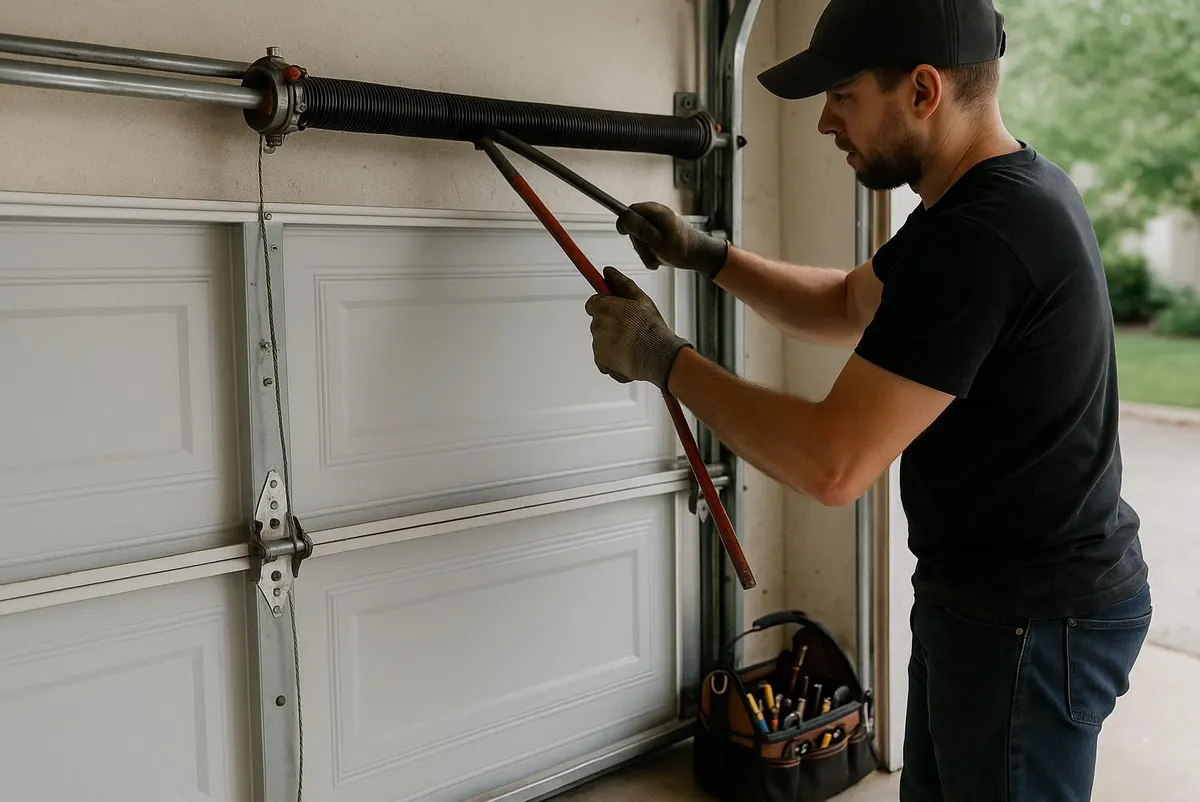
Torsion springs sit on a metal bar directly above the closed door. A visible gap between coils, or one side noticeably longer than the other, means a spring has already stretched past its working tension or partially given out. Extension springs run along the horizontal tracks on either side of the door — look for any section where the coils have separated or the spring looks stretched thin compared to the rest.
If this fails: the door will start pulling to one side as it opens, and in the worst case, the spring can snap completely, sometimes with a loud bang that shakes the whole garage.
2. Check for rust and pitting
Run a hand along the coils (door closed, opener unplugged). Surface rust, flaking, or pitted texture weakens the wire from the inside out, and it progresses faster here than in drier climates — the combination of afternoon humidity, salt-tinged air if you're near the coast, and summer storms keeps garage interiors damp longer than people expect.
If this fails: a corroded spring can snap with less warning than a clean one, since rust eats away at the metal unevenly.
3. Do the balance test
Disconnect the opener by pulling the release cord, then lift the door manually about halfway. A healthy door stays put. If it drifts down on its own or shoots upward, the springs are no longer matched to the door's weight.
If this fails: the opener motor is doing work it wasn't built for, which shortens its life and increases the odds of a sudden, hard spring failure.
4. Listen during the lift
Popping, squeaking, or a grinding sound as the door travels usually comes from a spring under uneven tension rubbing against its mounting hardware.
If this fails: it's often an early warning sign that arrives weeks before a full break, not something to wait out.
5. Inspect the cables near the spring assembly
Frayed, kinked, or rusted cables near the bottom brackets or around the drums often wear out alongside the springs, since both carry the same load. A fraying cable paired with a stretched spring is a sign the whole system is near the end of its working life together.
If this fails: the door can drop unevenly or come off track entirely, which is a separate repair on its own.
6. Note how long the current springs have been in service
Most garage door springs are rated for a general range of 7 to 10 years or around 10,000 open-close cycles, whichever comes first. A door used several times a day, or one that's been cycled more often during storm season for shutter checks and quick trips in and out ahead of weather, burns through that cycle count faster than the average.
7. Watch how the door sits when fully closed
One corner sitting lower than the other, or a visible gap along one side of the bottom seal, points to uneven spring tension pulling the door out of square.
If this fails: besides looking crooked, an unevenly seated door lets in wind-driven rain during the afternoon downpours this area gets most of the summer and fall.
8. Pay attention to the opener's effort
A motor that groans, runs hotter than usual, or trips the breaker more often is compensating for springs that aren't pulling their weight — literally.
If this fails: you risk a double repair bill, replacing both the springs and a motor that's been overworked trying to make up for them.
Why This Matters More Here Than in Drier Climates
Pasco County's humidity doesn't just rust metal faster — it also makes wood and composite door panels swell slightly, which changes how much resistance the springs are fighting against day to day. Add in wind-load demands during hurricane season, which put extra stress on a door's full assembly every time it's opened or closed in gusty conditions, and springs here genuinely work harder across a season than springs in a mild, dry climate. None of that means panic — it just means the checklist above is worth running every few months instead of once a year.
When to Call Dade City Garage Door Pro
If you've spotted a gap in the coils, rust eating into the wire, or a door that won't hold its position during the balance test, that's the point to stop testing and call. We handle Garage Door Spring Repair for both torsion and extension setups, matching the new spring's tension to your exact door weight rather than guessing — a mismatch is one of the most common causes of early failure. If your springs check out fine but the door still feels off, our Garage Door Maintenance & Tune-Up service covers lubrication, cable inspection, and balance adjustments that catch small problems before they turn into a Saturday morning emergency.
If your garage door in Dade City, FL is showing any of these warning signs, call Dade City Garage Door Pro today and we'll get a technician out to take a look before a worn spring turns into a bigger repair.